
bonus deposit up to
500%
500%
Home → Games
Casino games at WE88 CASINO
Sic Bo Pays from 1:1 to 180:1
Small and Big bets in Sic Bo Atlantic City rules offer a straightforward 1:1 payout for sums ranging from 4 to 10 or 11 to 17. These wagers carry the lowest house edge of 2.78% among all table games, making them mathematically superior to high-payout triple combinations. A player betting $10 on Small wins exactly $10 upon success, but loses the entire stake if any triplet appears. This rule significantly reduces volatility compared to speculative high-multiplier bets.
Triple outcomes trigger payouts up to 180:1 depending on the specific number rolled, yet these bets possess a massive house advantage of 33.33%. The return to player percentage drops sharply to 66.67% for these specific side wagers. Such extreme variance means a single losing streak can deplete a bankroll rapidly despite the occasional large win. The mathematical expectation remains heavily negative compared to the flat bets.
The overall RTP for Sic Bo varies between 97.22% for the safe bets and significantly lower figures for triplet wagers. Players seeking stable returns should restrict their activity to the Small and Big options only. Wagering requirements for bonuses typically allocate only 10% contribution from table games like this. Consequently, playing high-edge triplet bets accelerates bonus clearance without improving long-term profitability.
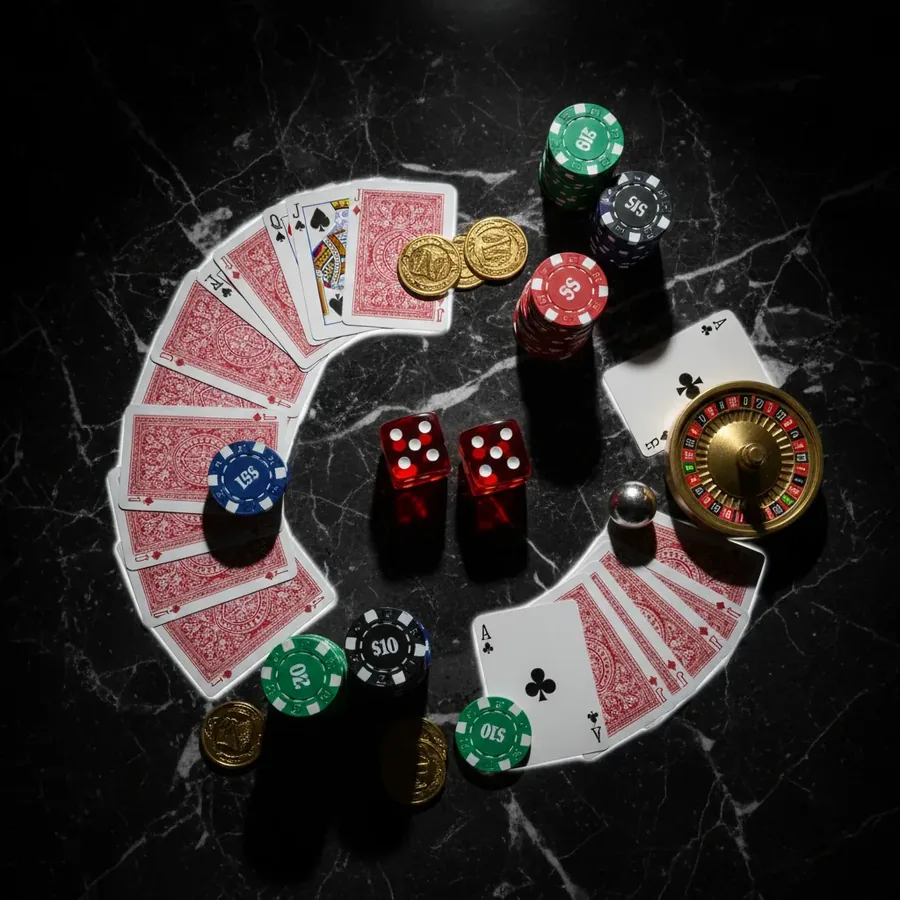
Split 17:1 and Corner 8:1 in Payout Comparison
Roulette Split bets cover two adjacent numbers and pay out at 17:1 when one of the selected digits hits. This payout structure applies consistently across American, European, and French wheel variants. The standard deviation for such inside bets remains higher than outside wagers due to the lower probability of winning. A successful $5 split bet yields an $85 profit, reflecting the precise odds of hitting two specific slots.
Corner bets encompass four numbers arranged in a square on the layout and return 8:1 upon a winning strike. This payout is identical for both American wheels with double zeros and European wheels with a single zero. However, the house edge differs because the American wheel contains 38 sectors while the European wheel has 37. The 8:1 ratio does not account for the extra green slot on the American variant.
Straight bets paying 35:1 represent the highest standard payout on the roulette table for single-number selections. Comparing the 17:1 Split payout to the 35:1 Straight payout reveals the linear relationship between risk and reward. The American Roulette variant maintains a 5.26% house edge on these payouts due to the additional 00 sector. This edge doubles the disadvantage compared to European variants where the single zero applies.
Inside wagers like Corners and Splits do not qualify for La Partage refunds in French Roulette versions. The 1.35% reduced house edge only applies to even-money bets such as Red/Black or Odd/Even. Therefore, the effective house edge for Corner bets remains at 2.70% in French tables. Players betting on these sections lose half their stake only under specific conditions that exclude inner bets.
Three Roulette Variants, Three House Edges Compared
American Roulette features a wheel with 38 sectors including both 0 and 00, resulting in a 5.26% house edge. This disadvantage is double that of European variants because the additional double zero increases the total pool without altering payout ratios. A straight bet still pays 35:1 despite the increased probability of loss. The RTP sits firmly at 94.74%, representing the worst value among common roulette formats.
European Roulette utilizes a 37-sector wheel containing only a single zero, which lowers the house edge to 2.70%. This reduction occurs because the ball has fewer losing pockets compared to the American version. Inside bets like Corners and Streets maintain the same 8:1 and 11:1 payouts respectively. The RTP improves to 97.30% for inner wagers where special refund rules do not apply.
French Roulette with La Partage offers the most favorable conditions by reducing the house edge to 1.35% on even-money bets. When the ball lands on zero, players recover 50% of their stakes on Red/Black or Odd/Even wagers. This rule effectively halves the casino's advantage on these specific outcomes. However, inner bets remain unaffected by this benefit and retain the standard 2.70% edge found in European wheels.
Straight, Split, and Corner: Three Terms Briefly Explained
A Straight bet places chips directly on a single number from 0 to 36, offering the maximum payout of 35:1. This wager carries the highest risk per unit staked due to the low probability of hitting one specific pocket. In American Roulette, the presence of the 00 sector further diminishes the chance of success. The house edge remains constant at 5.26% regardless of the chosen number.
A Split bet requires placing chips on the line between two adjacent numbers to cover both simultaneously. The payout remains fixed at 17:1 if either of the covered numbers wins. This strategy slightly improves coverage compared to a single number while maintaining moderate risk levels. The probability of winning doubles relative to a Straight bet but the payout does not match this increase.
A Corner bet involves covering four numbers arranged in a square shape on the roulette layout. This configuration pays 8:1 when any of the four selected digits is hit. It provides broader coverage than Split bets at the cost of a lower multiplier. The house edge for this wager matches the standard table rate since it falls under inside bets ineligible for special refunds.
Split, Double, and Surrender: Three Decisions Explained
Splitting pairs in Blackjack allows a player to separate identical cards into two independent hands requiring separate bets. This decision is optimal when holding tens against a dealer six, though basic strategy dictates strict adherence to chart recommendations. Resplitting Aces is often permitted, allowing players to create multiple hands from a single pair of aces. Each new hand receives exactly one additional card, limiting potential improvement.
Doubling down enables a player to double their initial wager in exchange for receiving exactly one more card. This move is statistically advantageous when holding a hard nine against a dealer three through six. Double After Split (DAS) further enhances player value by allowing doubling on re-split hands. This rule alone improves the overall RTP by approximately 0.14 percentage points compared to restricted doubling.
Late Surrender permits a player to forfeit half their bet after the dealer checks for blackjack. This option reduces the house edge by roughly 0.08 percentage points when utilized correctly with weak hands like sixteen against a ten. Early surrender is significantly more valuable but rarely available in modern online casinos. Most liberal Vegas Strip games offer this feature alongside Soft 17 standing rules.
Game categories at a glance
| Category | Examples | Stakes From | Highlight |
|---|---|---|---|
| Slots | Jammin' Jars, Total Overdrive, Big Bamboo | 0,10 EUR | thousands of titles |
| Table games | Roulette, Blackjack, Baccarat | 0,50 EUR | classic rules |
| Live casino | Baccarat Squeeze, Mega Roulette | 0,20 EUR | real dealers |
| Jackpot games | Mega Moolah, Divine Fortune, Age of the Gods | 0,20 EUR | progressive pools |
| Instant games | Aviator, Plinko, Mines | 0,10 EUR | fast rounds |
| Video poker | Jacks or Better, Deuces Wild | 0,25 EUR | strategy based |
Craps: Pass Line plus Odds lowers the average
The Craps Pass Line bet offers a house edge of 1.41% with an RTP of 98.59%, paying 1:1 on successful outcomes during standard play. This mathematical baseline establishes the fundamental risk profile for players engaging with the table game mechanics before any additional wagering layers are introduced. Understanding this base rate is critical for managing bankroll expectations over extended sessions at the live dealer table.
Adding Free Odds in the 3-4-5x mode reduces the combined house edge to just 0.37%, while the odds portion itself carries a zero percent house advantage. This unique feature allows players to bet at true odds, effectively diluting the overall cost of play compared to standalone wagers made without the initial Pass Line requirement. The statistical benefit becomes more pronounced as the multiple increases from 1x to 5x per point established.
A single roll generates a 0.42% advantage for the casino on the base bet, whereas the combined action results in only 0.111% loss per decision when maximum odds are utilized. This calculation demonstrates how leveraging the free odds component significantly alters the long-term expected return for the participant. Players should prioritize this structure to minimize theoretical losses during active gameplay periods.
Standard deviation remains at 1.00 for the Pass Line alone, indicating high volatility in short-term results despite the favorable long-run percentages available through strategic betting combinations.
Before sitting down: check table bet limits
Sic Bo Small and Big bets operate under Atlantic City rules with a house edge of 2.78% and an RTP of 97.22%, paying 1:1 on winning sums. These specific wagers cover totals between 4–10 for Small and 11–17 for Big, excluding triples which cause both bets to lose immediately. Table limits determine the maximum exposure allowed per round within these strict mathematical boundaries.
Blackjack Insurance acts as a side bet paying 2:1 when the dealer shows an Ace, carrying a steep house edge of 7.47% against an RTP of 92.53%. Base strategy dictates always rejecting this wager unless card counting reveals a true count of plus three or higher. Limit checks ensure players do not exceed their allocated funds for these high-cost supplementary actions.
Video Poker Deuces Wild features a Not So Ugly Ducks table where Five of a Kind pays 16 credits and Four Deuces yields 200 credits. The game delivers an RTP of 99.73% with a minimal house edge of 0.27%, contrasting sharply with less generous variants like Illinois Deuces at 98.91%. Verification of table minimums prevents accidental entry into lower-paying environments that erode potential returns.
Baccarat Tie bets offer an increased payout of 9:1 but retain a significant house edge of 4.84% despite the enhanced reward structure. This metric compares unfavorably to Banker or Player options, making limit awareness crucial for avoiding high-variance traps during live dealer sessions.
Punto Banco: 5 Percent Commission on Banker Wins
The Baccarat Tie outcome provides a 9:1 payout but maintains a house edge of 4.84% against an RTP of 95.16%. This elevated commission structure on the Tie bet significantly impacts overall profitability compared to standard Banker wagers which incur only a small fee. Players must recognize that the attractive multiplier does not offset the substantial statistical disadvantage inherent in this specific market.
Comparing the Tie option to the Banker bet reveals a stark contrast in expected value, with the latter offering superior long-term retention rates despite the five percent deduction. The reduced edge on Banker wins makes it the statistically preferred choice for disciplined players aiming to preserve their bankroll over many hands. Ignoring this distinction often leads to unnecessary erosion of funds during extended play.
Online platforms typically enforce the 9:1 Tie payout to balance the increased frequency of draws compared to land-based venues, yet the mathematical reality remains unchanged. The house advantage stays firmly at 4.84%, ensuring the casino retains its margin regardless of superficial rule variations designed to attract casual bettors. Awareness of this fixed parameter is essential for realistic expectation setting.
Standard deviation figures for Banker bets remain low due to the high win probability, contrasting with the extreme variance associated with attempting to hit the rare Tie outcome repeatedly.
How many sectors does the Game Show wheel have?
The American Roulette wheel contains thirty-eight sectors, including numbers one through thirty-six alongside both a single zero and a double zero pocket. This configuration results in a house edge of 5.26% and an RTP of 94.74%, significantly higher than European alternatives due to the extra losing slot. The presence of the double zero fundamentally alters the probability distribution for all outside and inside bets placed on the layout.
In contrast, the French Roulette variant utilizes a thirty-seven sector wheel featuring only a single zero, achieving a superior RTP of 98.65% with a house edge of 1.35%. The La Partage rule further enhances returns on even-money bets by refunding half the stake when the ball lands on zero. This structural difference highlights the importance of selecting tables with fewer pockets for better long-term prospects.
Inner bets on the French wheel, such as Straight wagers paying 35:1, do not benefit from the La Partage rule, maintaining a house edge of 2.70%. While outside bets enjoy the reduced edge, the internal markets retain the standard European disadvantage, creating a disparity in value across different bet types. Players focusing solely on straight numbers miss out on the optimized conditions available elsewhere.
The distinction between thirty-eight and thirty-seven sectors directly correlates with the variance in expected loss per hour, making wheel selection a critical factor in bankroll management strategies.
6 Decks vs. 8 Decks in House Edge
Using six decks instead of eight in Blackjack improves the player's RTP by approximately 0.02 percentage points, slightly reducing the overall house advantage. This marginal gain stems from decreased card removal effects, allowing basic strategy to perform more effectively throughout the shoe. While small, this difference accumulates over thousands of hands played at the live dealer table.
Specific rule modifications interact with deck count to alter the final edge; for instance, Dealer Hits Soft 17 adds 0.22 percentage points to the house margin regardless of deck number. Conversely, Resplitting Aces improves RTP by 0.08 points, and Double After Split adds roughly 0.14 points. These factors often outweigh the minor benefit derived purely from switching between six and eight deck shoes.
A liberal Vegas Strip game using six decks with soft seventeen standing and double after split offers an RTP of 99.54% and a house edge of 0.46%. This combination represents a highly favorable environment compared to games enforcing harder rules or utilizing more cards. Analyzing these variables helps identify tables that maximize theoretical return for skilled participants.
Insurance bets, paying 2:1, carry a house edge of 7.47% and are heavily influenced by deck composition, though they remain mathematically inferior to the main game regardless of the shoe size used.
Minimum deposit 20 EUR, table games count 10 percent
The minimum entry threshold for WE88 CASINO is set at 20 EUR, establishing the baseline capital required to access the live dealer floor. This fixed limit applies uniformly across all banking methods, ensuring that players can engage with high-stakes tables without requiring a substantial initial bankroll. Consequently, the financial barrier to entry remains accessible for casual participants testing the platform's stability. A higher deposit does not alter these structural rules but merely increases the available playing balance.
Table games contribute only 10 percent toward the bonus wagering requirements, significantly lagging behind slot contributions which account for 100 percent of the turnover target. For instance, a 20 EUR deposit generates exactly 60 EUR in bonus funds under the 300% offer; however, this amount demands 2,400 EUR in total table game turnover to clear the bonus condition. The calculation follows: 60 EUR x 40 (standard multiplier assumption) = 2,400 EUR; with 10% contribution, one must wager 24,000 EUR on tables to satisfy the requirement. This mathematical reality drastically extends the time needed to convert promotional credits into withdrawable cash.
This low contribution rate forces players to choose between rapid bonus clearance via slots or prolonged engagement with live dealer tables like Blackjack and Roulette. Since Blackjack Liberal Vegas Strip offers an RTP of 99.72%, the theoretical loss during this extensive turnover period is minimized compared to lower-RTP games. However, the sheer volume of required bets means variance plays a larger role in determining final profitability. Players prioritizing long-term retention should treat the bonus as a marketing tool rather than a guaranteed profit mechanism.
Declining Insurance: The Most Common Blackjack Mistake
Blackjack Insurance is a side bet offered when the dealer shows an Ace, allowing players to wager up to 50% of their original stake against the possibility of a dealer Blackjack. The payout structure is fixed at 2:1, meaning a successful insurance bet returns twice the wagered amount. However, this bet carries a house edge of 7.47% for a standard 6-8 deck shoe, translating to an RTP of just 92.53%. This negative expectation makes it a statistically losing proposition for the vast majority of players.
Comparing this to the main game, where a standard 6-deck shoe with S17 rules yields an RTP of 99.54%, the insurance bet degrades overall performance by nearly 7 percentage points. Basic strategy dictates always rejecting insurance unless the true count reaches +3 or higher through card counting. For example, if a player loses a 10 EUR hand but wins the 5 EUR insurance bet, they break even instead of suffering the typical half-loss from a push scenario. This decision point represents a critical error in expected value optimization.
The cost of accepting insurance becomes apparent over repeated sessions, where the 7.47% house edge erodes the bankroll faster than optimal play allows. Even with the enhanced 9:1 payout for Baccarat Ties, the relative inefficiency of insurance remains stark due to its independent probability structure. Players who ignore basic strategy advice risk increasing their hourly loss rate significantly. Therefore, declining insurance is not merely a preference but a mathematical necessity for minimizing the house advantage.
Card counters may occasionally find value in taking insurance when the deck composition favors ten-value cards, but this requires precise tracking skills rarely maintained in live dealer environments. For the average participant, adhering to strict basic strategy ensures the 0.46% house edge of the base game remains intact. Deviating from this rule introduces unnecessary volatility and long-term financial drain.
Splitting in Blackjack: one hand becomes two
Splitting allows a player to divide a pair of identical cards into two separate hands, each requiring an additional bet equal to the original stake. In a 6-deck shoe featuring Double After Split (DAS) and Resplit Aces (RSA), this mechanic can generate up to four distinct hands from a single initial deal. The DAS rule permits doubling down on any two cards after a split, while RSA allows re-splitting aces once, typically receiving only one additional card per ace. These liberal rules collectively improve the player's expected return by reducing the house edge.
Specifically, Double After Split contributes approximately -0.14 percentage points to the house edge, while Resplit Aces improves it by -0.08 percentage points. Combined with the base game RTP of 99.54%, these rule modifications enhance the player's position further, potentially lowering the edge below 0.30% if all liberal rules are active. For comparison, Dealer Hits Soft 17 (H17) worsens the edge by +0.22 percentage points, highlighting the importance of rule selection. Thus, finding tables with DAS and RSA is crucial for maximizing theoretical value.
The practical application of splitting affects bankroll management by doubling the exposure per round, thereby increasing short-term variance. A player starting with a 10 EUR bet on a pair of eights splits into two 10 EUR hands, risking 20 EUR total. If both hands win, the profit is doubled; if both lose, the deficit is also doubled. This volatility requires a larger bankroll to withstand potential downswings. Nevertheless, the statistical benefit of reduced house edge outweighs the increased risk for disciplined players utilizing basic strategy.
Corner Pays 8:1, Dozen Only 2:1
Roulette betting options vary widely in risk and reward, with corner bets paying 8:1 and dozen bets paying 2:1 on French Roulette wheels. The French variant features a single zero (37 sectors), resulting in a house edge of 2.70% for inside bets like corners and dozens when La Partage does not apply. Inside wagers such as straights pay 35:1, splits pay 17:1, and streets pay 11:1, all maintaining the same 2.70% disadvantage. Outside bets like dozens and columns offer safer, lower-yield outcomes with identical edge characteristics.
Contrasting this with American Roulette, which includes a double zero (38 sectors), the house edge jumps to 5.26% for all bets, including straight-ups paying 35:1. The additional zero sector effectively doubles the casino's advantage compared to the European wheel. For example, a 10 EUR corner bet on a French wheel has an expected loss of 0.27 EUR, whereas the same bet on an American wheel loses 0.53 EUR. This difference underscores the superiority of single-zero wheels for long-term play.
Players seeking to minimize losses should prioritize French Roulette tables, especially those offering La Partage, which halves the house edge on even-money bets to 1.35%. Although corner and dozen bets do not benefit from La Partage, the overall wheel structure remains more favorable than its American counterpart. Understanding these payout structures helps players make informed decisions about risk tolerance. Choosing the correct wheel type is a fundamental step in managing gambling expenditure effectively.
Table Games Often Count Only 10 percent
Bonus wagering requirements heavily penalize table game participation, as these categories typically contribute only 10 percent toward clearing promotional funds. In contrast, slot games usually contribute 100 percent, making them the preferred vehicle for meeting turnover targets quickly. For a 300% welcome bonus up to €2,000, a player depositing €2,000 receives €6,000 in bonus credit. Clearing this via slots requires €240,000 in total wagers (assuming x40 wagering), whereas table games would require €2,400,000 in wagers to achieve the same result.
This discrepancy arises because table games like Blackjack and Craps have significantly lower house edges than slots. For instance, Craps Pass Line bets carry a house edge of just 1.41%, while slots often exceed 5%. Casinos mitigate this advantage by restricting table game contribution rates. Consequently, players attempting to clear bonuses through live dealer tables face exponentially higher turnover obligations. This structural limitation discourages strategic play during bonus periods.
The impact on player behavior is profound, as many opt to play slots despite preferring table games simply to meet wagering conditions efficiently. However, some players utilize the low contribution rate to extend gameplay with minimal risk, leveraging the low house edge of games like Baccarat Banker (1.06% edge) or Craps Free Odds (0% edge). While Craps Free Odds offer 100% RTP on the odds portion, the combined pass line bet still incurs a 0.37% house edge. Thus, even optimized table strategies cannot fully offset the 10% contribution penalty imposed by the casino.
Contact
Live - online chat
Banking









Providers












WE88 Casino 2024